

The silent budget drain within residential properties is rarely due to a single catastrophic system failure. It is the slow, steady erosion of home efficiency caused by minor mechanical friction, air leaks, and undetected fluid loss. Homeowners often accept a fifteen to thirty percent inflation in utility bills as a standard cost of aging infrastructure, unaware these costs can be drastically reduced with minimal investment. The traditional home maintenance approach often pits massive expenses, like full system replacements, against the savings of seasonal and preventative tuning. Waiting for a system to break down before addressing efficiency guarantees maximum out-of-pocket spending. The micro-fix philosophy emphasizes a proactive approach, involving low-effort, high-impact fixes for immediate reductions on gas, electric, and water bills. Addressing small variables—like a misaligned weatherseal, dusty motor bearing, or mineral scale—allows property owners to reclaim their utility budgets.
Calibrating Burner Flame Geometry and Clearing Restricted Intake Dampers
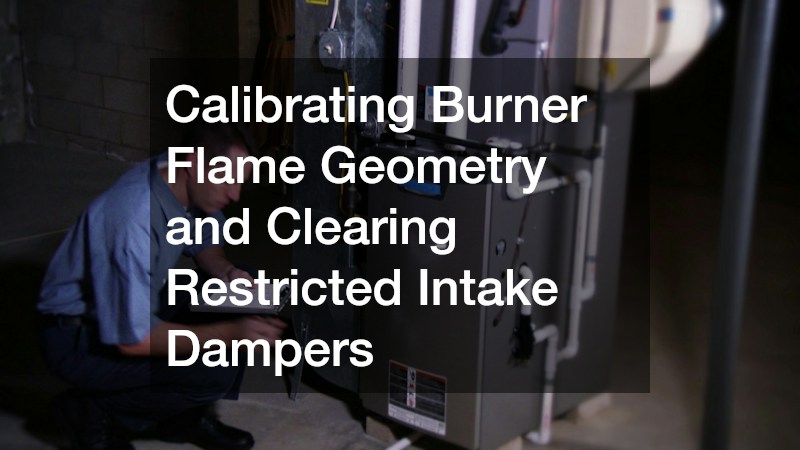
When analyzing winter utility spikes, the first place to investigate is the combustion efficiency of your heating equipment. Over time, carbon buildup, microscopic dust particles, and slightly misaligned igniters can cause incomplete fuel combustion, a condition that rapidly drives up therm consumption. Diagnosing this issue often begins with a simple visual inspection of the burner flame. A highly efficient natural gas or propane flame should burn with a crisp, steady blue hue. If you observe irregular, flickering yellow or orange flames, your system is experiencing fuel inefficiency. This not only wastes expensive heating fuel but also produces excess soot that further degrades internal components.
- Vacuuming Burner Orifices: Using a narrow, angled attachment on a shop vacuum, carefully clear out any dust or spider webs around the primary burner area, as even minor physical obstructions can disrupt the optimal oxygen-to-gas ratio required for clean combustion.
- Cleaning the Flame Sensor: A carbon-coated flame sensor can cause the system to short-cycle rapidly. Polishing the metal rod gently with a piece of fine emery cloth or extra-fine steel wool can restore its sensitivity and keep the ignition cycle running smoothly.
- Recognizing Mechanical Limits: It is vital for homeowners to recognize when minor diagnostic adjustments cross the line into complex territory, recognizing these boundaries ensures you seek professional furnace repairs before unexpected cold snaps trigger an emergency breakdown.
Eliminating Blower Motor Friction and Addressing Wear in Ignition Sequences
Beyond the combustion process, the mechanical delivery of heated air represents a massive potential point of energy loss. Mechanical friction is the absolute enemy of electrical efficiency. When inspecting the blower assembly, it is critical to evaluate belt tension, check for debris accumulation on the blower wheel blades, and ensure motor bearings are adequately lubricated.
- Monitoring Blower Draw: A blower wheel weighed down by compacted dust can lose up to twenty percent of its aerodynamic efficiency, forcing the system to run much longer to satisfy the thermostat and drawing more amperage.
- System Balancing: To verify that the equipment hits its annual fuel-utilization efficiency targets, it is wise to leverage certified HVAC services for static pressure testing and heat exchanger integrity checks prior to the peak winter season.
- Lubrication Protocols: Applying three drops of non-detergent motor oil to the blower motor’s lubrication ports before winter usage prevents the bearings from seizing and reduces the electrical load required to spin the heavy fan assembly.
Mastic-Sealing Accessible Trunk Lines and Tightening Boot Transitions
Generating heated or cooled air is only half of the mechanical equation; delivering that conditioned air efficiently to the living space is equally critical. In the average home, unsealed duct networks lose an astonishing twenty to thirty percent of conditioned air into unconditioned spaces such as attics, basements, or crawl spaces. This friction and leakage mean that you are paying to heat or cool the structural voids of your house rather than the rooms you actually inhabit.
- Locating Disconnects: Inspect all accessible supply branches and return lines in exposed basement or attic spaces. Pay special attention to the transition points where round branches meet rectangular trunk lines or floor boots.
- Proper Taping and Sealing: Standard cloth-backed tape degrades quickly in extreme attic temperatures. Replace brittle tape with metallic foil tape, and apply a thick, continuous layer of fibrous mastic paste over all sheet-metal seams to create a permanent, airtight seal.
- Pressure Balancing: Executing targeted duct repair helps balance return-air pressure, which crucially prevents your system from sucking hot, dusty attic air or humid crawlspace air into the clean envelope of your home.
Straightening Condenser Fins and Flushing Chemical Deposits from Drain Traps
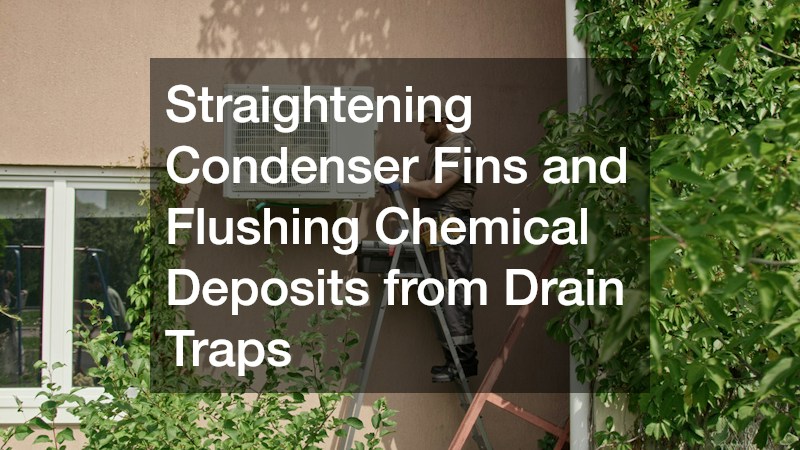
During the summer months, outdoor cooling components bear the brunt of environmental wear. The outdoor condensing unit relies on thousands of thin aluminum fins to dissipate heat extracted from your home. When these fins are bent by hail, errant debris, or blocked by wet leaf litter, the system’s ability to transfer heat plummets drastically.
- Outdoor Coil Upkeep: Remove any vegetation within a two-foot radius of the unit. Clean the aluminum fins using a dedicated foaming coil wash that pushes dirt outward, and meticulously align any bent heat-transfer fins using a specialized fin comb.
- Condensate Maintenance: The indoor evaporator coil produces gallons of water daily during high-humidity periods. Clearing slime, algae, and microbial plugs from the condensate trap lines using a simple white vinegar flush or a wet-dry vacuum draw prevents backups that cause automatic safety shutdowns.
- Professional Checks: Bi-annual air conditioning services are highly recommended for detailed refrigerant subcooling and superheat checks. Proper refrigerant charge stops the compressor motor from overdrawing electricity during ninety-degree peak demand cycles, lowering summer power bills.
Rebuilding Degraded Tank Flappers and Regulating Fixture Supply Pressure
Water utility bills often creep upward due to silent, parasitic leaks rather than sudden, catastrophic pipe bursts. The most common culprit in any residential property is a slow-draining toilet flapper seal. Diagnosing these silent leaks is incredibly simple: drop a few drops of food coloring into the upper tank and wait fifteen minutes without flushing. If color seeps into the bowl, the flapper is failing. A seemingly negligible, continuous half-gallon-per-minute leak can waste thousands of gallons over a single billing quarter.
- Upgrading Flapper Valves: Swap out old, brittle rubber flappers for modern, chemical-resistant silicone models that will not degrade when exposed to chlorine or municipal water treatments. At the same time, inspect and replace corroded fill valves that fail to shut off completely.
- Fixture Flow Reduction: Install lower flow pressure-compensating aerators on bathroom and kitchen sinks. These devices maintain the physical sensation of high pressure while restricting actual volumetric flow, immediately cutting hot water usage at the tap.
- Managing Line Pressure: Chronic high municipal line pressure threatens all fixture seals in the home. Contracting plumbing services to install or recalibrate a whole-house pressure reducing valve protects your infrastructure and prevents premature appliance failures.
Purging Water Heater Sediment and Preventing Mineral Scale Accumulation
Thermal scale drag is a significant, yet largely invisible, drain on your household energy budget. Inside your water heater, dissolved minerals in the municipal or well water settle to the bottom of the tank as they are heated. This calcium carbonate and magnesium sediment acts as an incredibly effective insulating barrier between the heating elements and the water itself, forcing the unit to run up to fifteen percent longer to achieve the thermostat’s set temperature.
- Seasonal Tank Flushing: Connect a heavy-duty garden hose to the bottom drain valve and perform a full seasonal tank flush until the runoff water runs completely clear of cloudy mineral sediment.
- Anode Rod Inspection: Check the sacrificial magnesium or aluminum anode rod every two years. This rod is designed to corrode safely so the inner steel tank lining does not, effectively halting internal decay.
- Long-Term Mitigation: For homes with significantly hard water, incorporating whole-home water treatment systems can virtually eliminate hard-water buildup on internal heating coils, dramatically extending the water heater’s operational lifespan and maintaining its baseline heating efficiency.
Renewing Perimeter Weatherstripping and Shimming Uneven Sill Plates

The structural envelope of a house is constantly shifting, settling, and reacting to seasonal humidity changes. This movement inevitably compromises the seals around entryways, leading to perimeter drafts that cause your zoned thermostats to short-cycle continuously. Infiltration checks are the very first step in diagnosing these invisible breaches. By moving a digital thermal leak detector around door perimeters on a cold or windy day, you can pinpoint exactly where conditioned air is escaping.
- Replacing Flattened Seals: Remove flattened, ineffective adhesive foam strips from the door jambs. Upgrade to tubular silicone or thermoplastic elastomer seals that maintain their memory and flexibility even in sub-zero ambient temperatures.
- Adjusting the Threshold: Many modern entryways feature adjustable sill plates. Turn the threshold screws systematically to raise the plate just enough to create an airtight, light-blocking seal against the door’s bottom sweep.
- Structural Re-alignment: When structural jamb warpage, out-of-square framing, or severely rotted sub-sills demand precision, consulting local door companies is the safest route to ensure a heavy entryway is re-hung or realigned to absolute factory specifications.
Tensioning Roller Assemblies and Replacing Bottom Astronomical Weatherseals
The attached garage acts as a massive unconditioned buffer zone that often leaches heat directly out of the home through common interior walls and ceiling planes. When the garage environment is not managed, it creates a massive thermal bridge. The primary defense against this energy bleed is the largest moving component of the entire residential structure.
- Bottom Seal Replacement: Inspect the bottom rubber gaskets for dry rot, tearing, or flattening. Upgrading to heavy-duty, multi-layer bulb seals prevents icy drafts and rainwater from penetrating the concrete slab and dropping the ambient garage temperature.
- Roller and Track Maintenance: Lubricate the track rollers, hinges, and torsion springs with a dedicated lithium or silicone spray. Ensure the vertical track is aligned so the insulated panel sits entirely flush against the exterior stop molding.
- Professional Balancing: High-tension spring systems are exceptionally dangerous to adjust without proper industrial training. Engaging specialized garage door services for spring balancing ensures the overhead barrier closes tightly against ground seals without placing destructive strain on the motor.
Installing Spectrally Selective Films on Exposed South and West Glazing
During the peak of summer, windows with significant southern and western exposure act as powerful thermal radiators. The solar heat gain coefficient measures how much solar radiation is admitted through a window and subsequently released as ambient heat inside the home. Unshaded, highly exposed glass drives up cooling runtimes drastically during the hottest hours of the afternoon, acting as a massive counter-force to your home’s thermal regulation.
- Evaluating Retrofit Films: Applying retrofit window films, such as advanced ceramic, carbon, or low-emissivity options, can reject up to eighty percent of infrared heat. Crucially, these modern selective films accomplish this thermal rejection without blocking visible light or creating a dark appearance inside the living space.
- Application Precision: While do-it-yourself kits exist, avoiding creases, trapped dust, and microscopic bubbling requires absolute precision and a highly sterile application environment that most homeowners cannot easily replicate.
- Installation Safety: Double-pane windows are particularly sensitive to internal heat buildup. Hiring professional window tinting services ensures the correct film is matched to sensitive glass assemblies, completely avoiding the catastrophic risk of thermal shock glass breakage.
Clearing Compressor Heat Exchangers and Clearing Lint Exhaust Back-Pressure
Major household appliances consume a vast percentage of monthly electricity, but their operational efficiency drops precipitously when basic airflow is restricted. Refrigeration units and laundry machines are the primary offenders of mechanical drag, pulling immense amounts of hidden wattage when forced to operate under less-than-ideal internal airflow conditions.
- Refrigeration Care: A refrigerator relies on condenser coils to release the heat it pulls from the insulated food compartment. Using a specialized long-handled coil brush and a vacuum wand, strip accumulated pet hair, dust, and carpet fibers off the coils, reducing compressor run cycles by up to twelve percent.
- Laundry Efficiency: Dryer efficiency plummets when exhaust is restricted by wet lint. Replace ribbed, flexible vinyl dryer ducts with rigid, smooth metal pipe runs that do not trap debris. Clear the exterior flapper damper hood to ensure unimpeded exhaust flow.
- Monitoring Performance Drift: When internal heating elements show intermittent cycling failures or runtimes double, scheduling a targeted appliance service visit will catch failing thermal relays before the machines suffer complete, unrepairable mechanical failure.
Transform weekend chores into a formalized, seasonal strategy to prevent maintenance fatigue. Instead of a massive overhaul in one month, divide these tasks throughout the year. Dedicate early spring to cooling preparation, outdoor coil cleaning, and solar management. Focus early autumn on heating readiness, combustion checks, and draft elimination. Biannual tasks like envelope reviews and plumbing audits can be done in the mild months of spring and fall. Tracking the return on investment is motivating and validating. Set up a utility baseline sheet to calculate reductions in kilowatt-hour, therms, and gallons month-over-month, transforming advice into tangible proof. A ten percent drop in gas usage or a fifteen percent reduction in electrical draw, with identical weather, underscores the value of the effort. This approach redefines upkeep, shifting tasks from burdens to guaranteed financial returns, protecting the property’s integrity and equity.