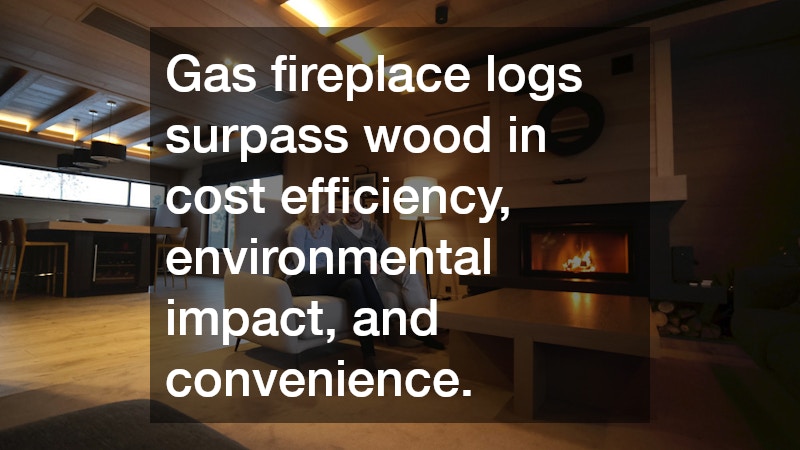

Gas fireplace logs offer numerous advantages over traditional wood, combining convenience, efficiency, and environmental benefits. Switching from wood to gas enhances indoor ambiance while providing practical advantages that often make gas the preferred choice for homeowners.
Cost Benefits Compared to Wood
Initial Installation Costs
Gas fireplaces typically require less labor and fewer materials than wood-burning setups. Many models allow for easy conversion of existing fireplaces, reducing construction costs.
Financial incentives, including tax credits for clean energy, may further offset initial expenses. Affordable gas logs also minimize the need for major adjustments, making modern heating systems accessible without a prohibitive upfront cost.
In contrast, wood-burning fireplaces require ongoing investments in chimney maintenance, fireproofing, and consistent firewood purchases. Seasonal price fluctuations and hidden costs, such as safety inspections, add unpredictability. Gas systems provide a more stable and predictable financial outlay.
Long-Term Maintenance Savings
Maintaining gas logs is simpler and less frequent than wood. Routine cleaning involves wiping components and checking connections, with no ashes, creosote, or chimney repairs. Over time, these reduced maintenance requirements save money and effort. Gas systems are designed for consistent performance, avoiding the degradation common in wood-burning setups, which reduces replacement needs and prolongs service life.
The absence of organic residue also protects components, minimizing repair needs. Gas fireplaces offer reliability with minimal oversight, translating to long-term affordability and convenience.
Fuel Cost Comparison
Gas fireplaces operate on natural gas or propane, providing a stable, economical fuel source compared to firewood, which can fluctuate in price and availability. Many utility providers offer predictable payment plans, while gas units efficiently convert fuel into heat. Direct venting keeps warmth indoors, reducing overall fuel consumption.
Wood requires storage, protection from moisture, and transport logistics, increasing indirect costs. Gas lines offer constant, low-maintenance access to fuel, contributing to overall efficiency.
Environmental Impact
Reduced Emissions
Gas logs burn cleanly, producing less particulate matter and carbon monoxide than wood. This improves indoor air quality and lowers the home’s carbon footprint. Advanced burner technology minimizes harmful byproducts, benefiting both indoor and outdoor air quality.
Wood-burning fireplaces release smoke, ash, and volatile organic compounds, increasing air pollution and respiratory risks. By contrast, gas combustion produces mainly water vapor and small amounts of CO2, making it a more environmentally responsible choice.
Efficiency and Energy Consumption
Modern gas fireplaces use direct venting and sealed combustion systems to transfer more heat into living spaces. Combined with thermostatic controls, they provide consistent, adjustable warmth with minimal fuel waste. Wood fireplaces often lose significant heat through chimneys and masonry, making gas a more efficient, sustainable option.
Higher efficiency reduces energy consumption, supporting national and global sustainability goals while keeping utility bills manageable.
Conservation of Wood Resources
Using gas logs reduces demand for firewood, helping preserve forests and ecosystems. This conservation mitigates deforestation, soil erosion, and habitat loss. By allowing forests to regenerate, gas fireplaces indirectly support carbon sequestration and long-term environmental sustainability.
Environmentally conscious homeowners contribute positively to eco-friendly initiatives, aligning personal heating choices with broader conservation efforts.
Convenience Compared to Wood
Ease of Use and Operation
Gas fireplaces eliminate the need for manual ignition, chopping, or stacking logs. Many units feature remote controls and smart home integration for instant operation. Adjustable flames provide both heat and ambiance without the unpredictability of wood fires. Built-in safety features like automatic shut-offs further reduce oversight, making gas fireplaces highly user-friendly.
Time Savings
Gas units save time on preparation and post-fire cleanup. No ash or soot means less maintenance, allowing homeowners to enjoy warmth immediately. The streamlined operation aligns with busy lifestyles, making gas fireplaces a practical, efficient heating solution.
Flexibility in Use
Gas logs offer instant, controllable heat with adjustable settings to meet individual preferences. They integrate into various rooms and interior styles, providing aesthetic versatility. Smart home compatibility and programmable schedules enhance convenience, combining comfort, control, and efficiency for modern households.
Gas fireplace logs surpass traditional wood fireplaces in cost efficiency, environmental impact, and convenience. While initial installation may be higher, reduced maintenance, predictable fuel costs, and long-term savings make them economically sound. Environmentally, they lower emissions, conserve wood resources, and maximize energy efficiency. Operationally, they offer effortless control, time savings, and flexible use, making them ideal for modern homes. Overall, gas logs are a sustainable, practical, and versatile heating solution.